MV-Adapter for Anime Character Modeling
Six-view SDXL inference, silhouette-based GLB reconstruction, and a likeness test with Kiku’s existing character sheet.
3D reconstructions
The models are static, unrigged GLB meshes.
Download GLB: Kiku · Motorcycle courier · Apprentice witch
Kiku: image-to-multiview
Only the front panel of the original Kiku turnaround went into the adapter. The other panels were held back for comparison.
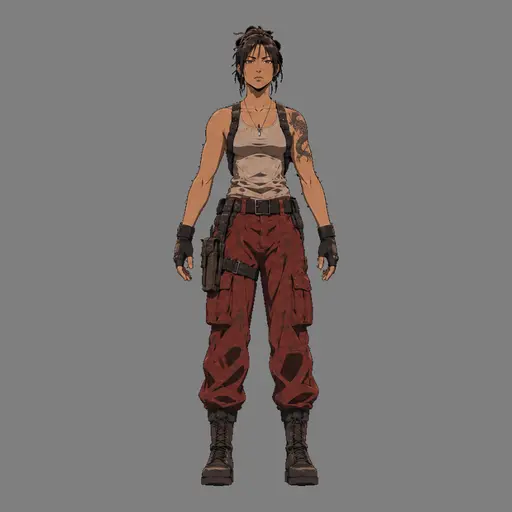
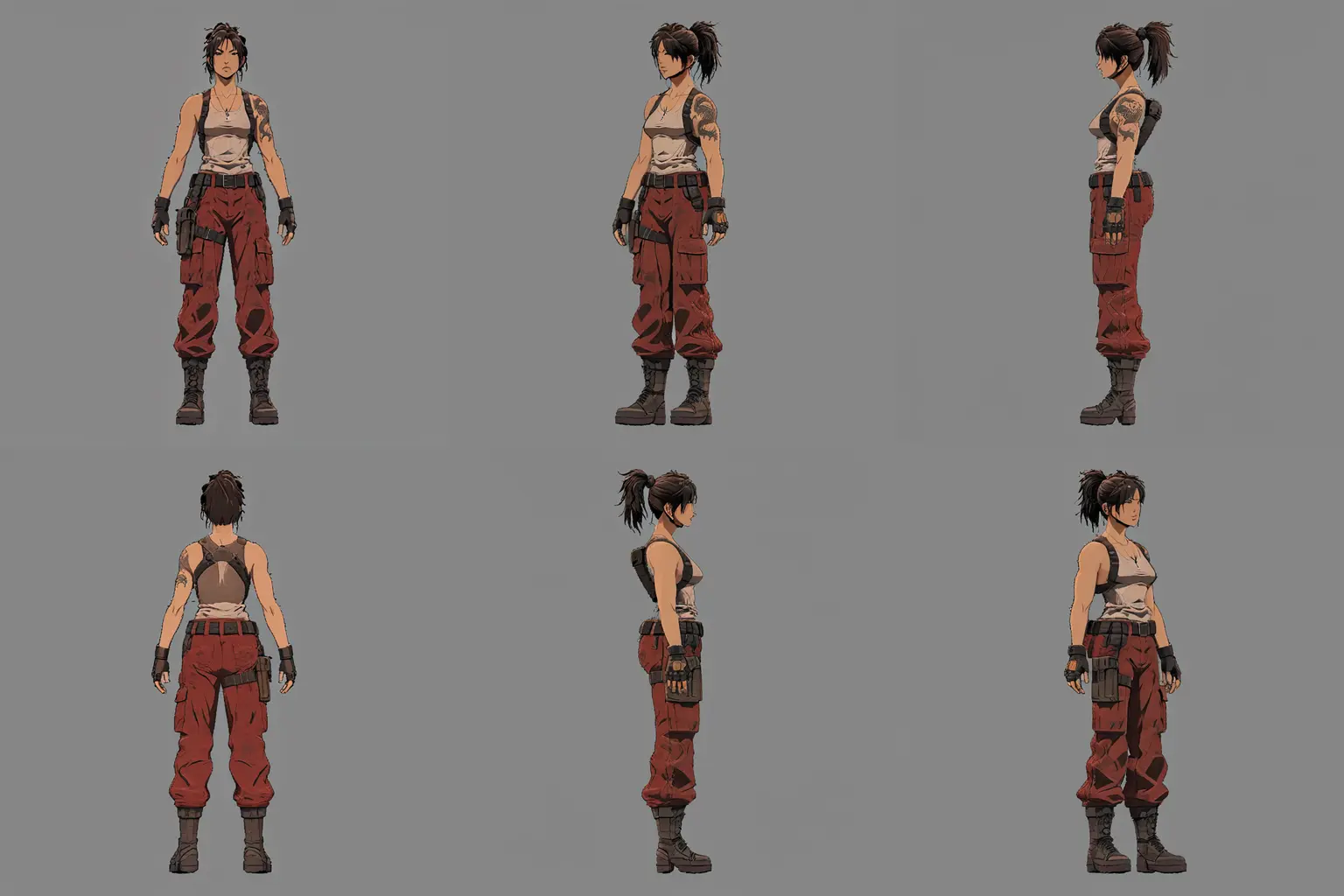
Seed 21 carried the tank top, rust-red cargo trousers, boots and arm tattoo into the new views. It changed the short tied-up hair into a longer tail in profile and redrew parts of the rear harness. Seed 72 also invented a dangling accessory at the hip. The seed 21 result was the closer match and is shown here. The mesh is a likeness blockout, not a production character.
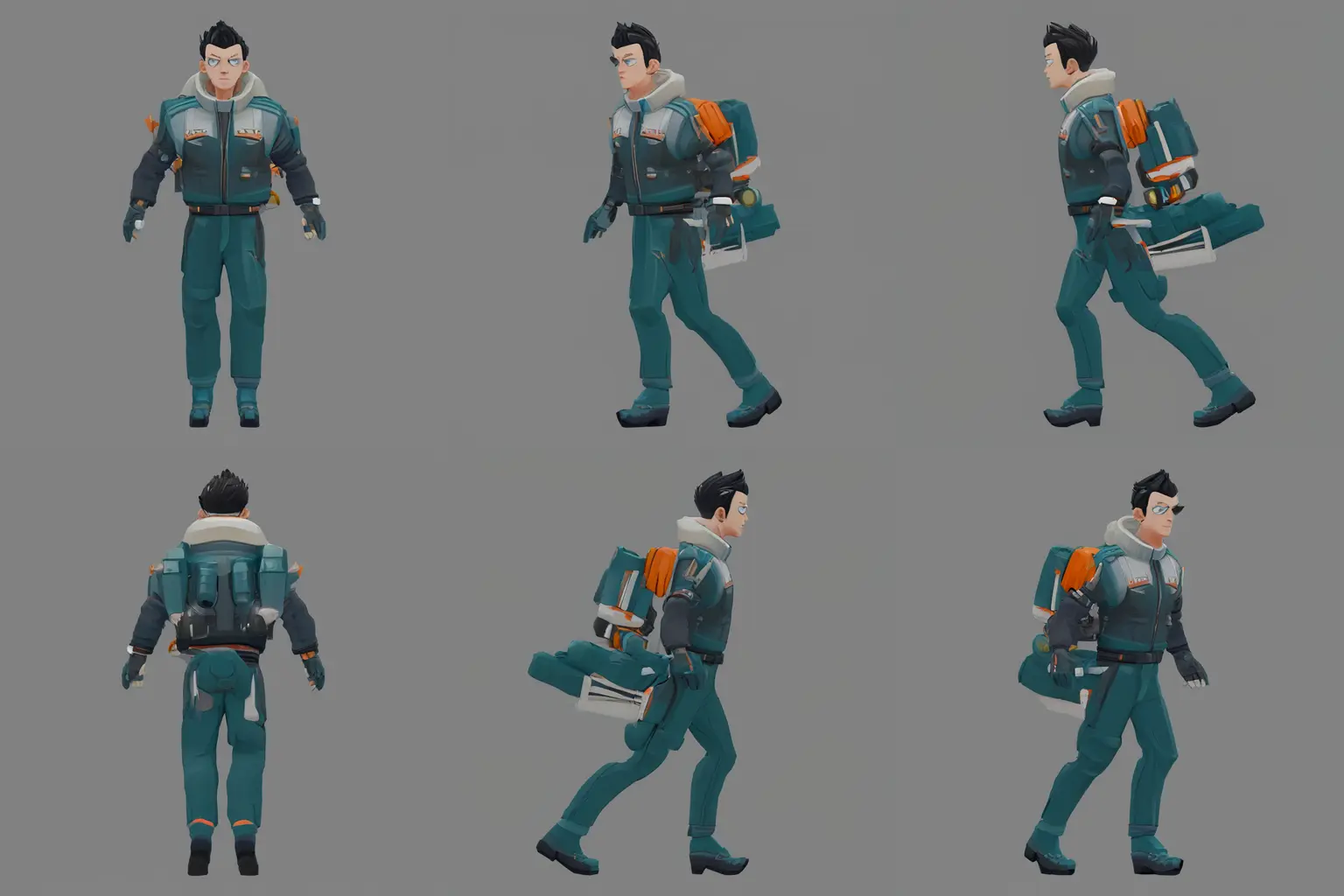
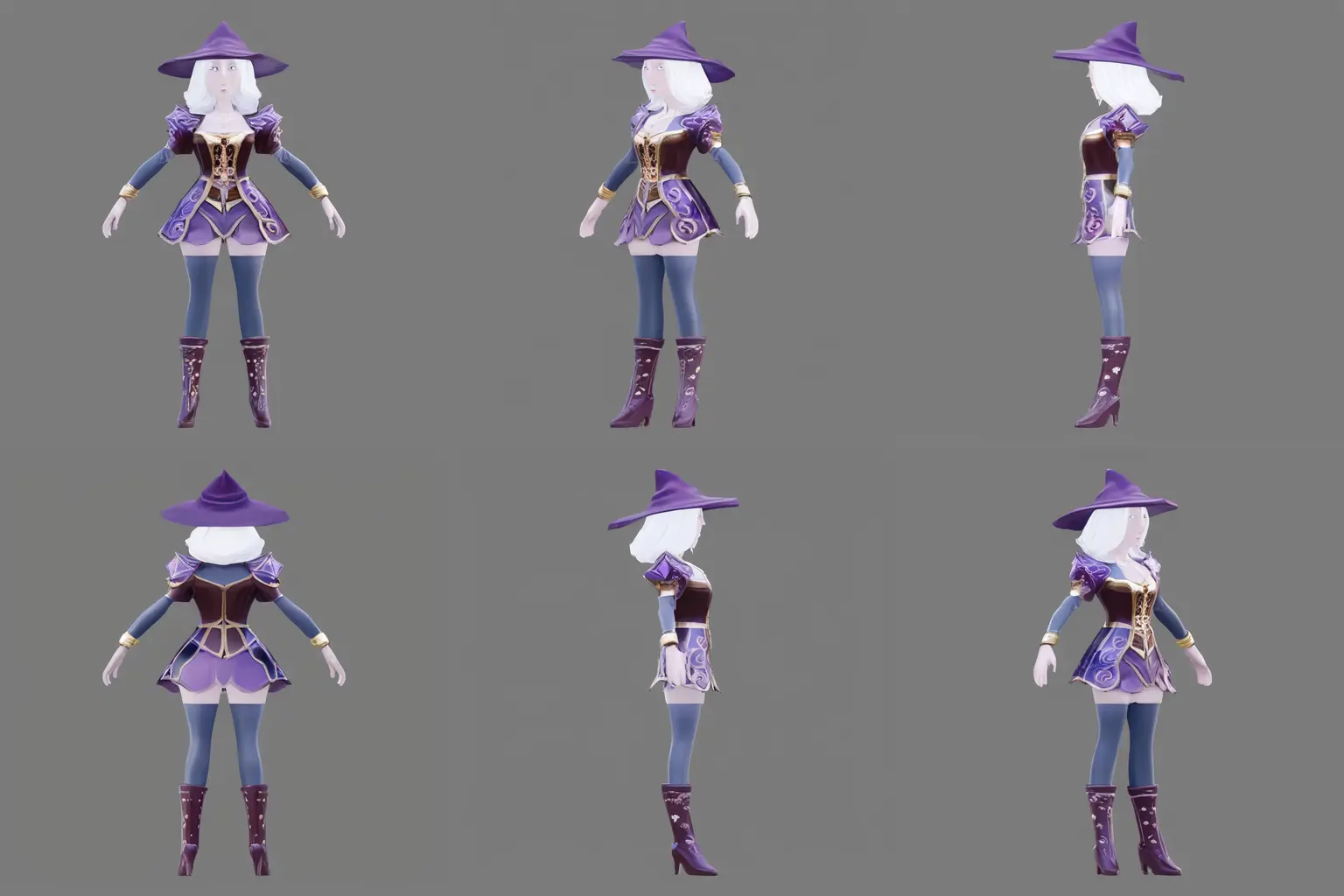
Original characters: text-to-multiview
Generation, reconstruction and security
MV-Adapter (Huang et al., ICCV 2025) generated six 768 × 768 images per sample on an RTX 3090. A separate script projected foreground masks into a volume, extracted the surface with marching cubes, and assigned vertex colors from the generated images. The GLBs are rough visual hulls. They cannot recover concavities that no silhouette reveals, and misaligned silhouettes can distort or erase thin details.
The reviewed upstream revision has optional paths that execute remotely supplied Python for background removal or load checkpoints via pickle-compatible deserialization. The broad install list also includes an unpinned Git dependency. This run skipped those paths, used hash-locked binary dependencies and verified safetensors weights, and kept inference offline in an unprivileged container. That review covers this inference path, not the training or web-demo stack.
Each six-view set took about 37 seconds from text (32 denoising steps) or 45–49 seconds from the Kiku reference (35 steps), excluding model loading. Peak PyTorch GPU allocations were 9.19 GiB and 15.21 GiB respectively.